Stryker, Shamoon, and the Case for Zero-Trust Least Privilege Software Control
Date: March 15, 2026
Executive Summary
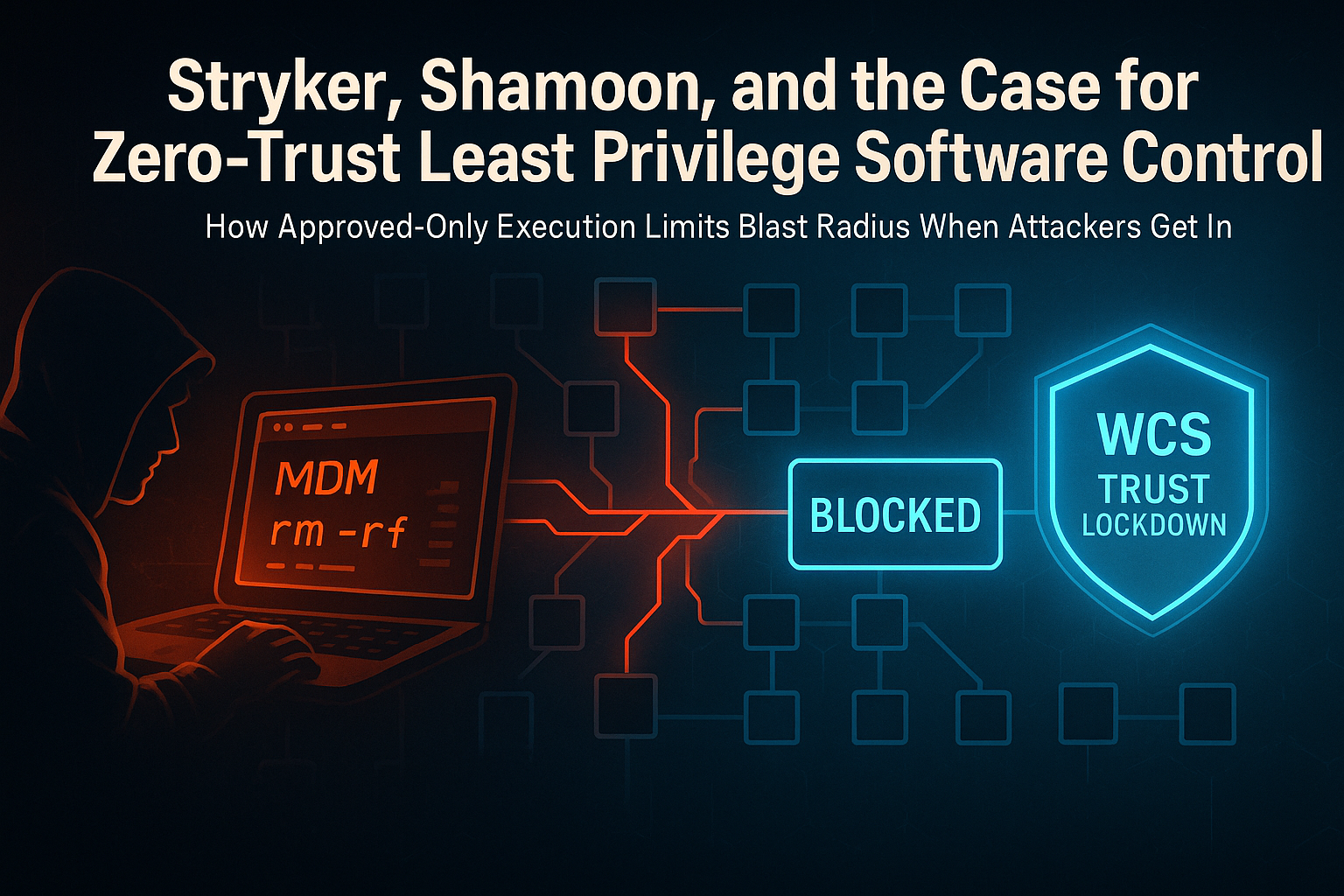
- What happened: On March 11, 2026, medical technology giant Stryker was hit by a destructive cyberattack attributed to the Iran-linked Handala group, disrupting its Microsoft environment globally and affecting ordering, manufacturing, and shipping operations across multiple continents.
- How it worked: According to public security reporting and researcher analysis, the attack involved phishing to steal credentials, with attackers then reportedly leveraging access to Microsoft Intune — Stryker's mobile device management platform — to push destructive wipe commands to connected endpoints. Stryker has confirmed disruption to its Microsoft environment; the specific intrusion chain has not been independently confirmed by Stryker.
- The lesson: Once an attacker has access to an overpowered admin account or management tool, damage can scale across an entire enterprise within hours. A Least Privilege software control framework can significantly reduce that blast radius.
- What to do: Enforce approved-only software execution, restrict which accounts and tools can initiate widespread administrative actions, and assume that identity compromise will happen — then ask what an attacker could actually do next.
The Stryker Attack Shows How Fast Damage Can Spread
On the morning of March 11, 2026, employees at Stryker Corporation — one of the world's largest medical technology manufacturers — arrived to find their devices dark. Login screens across the company's global footprint had been replaced by the logo of Handala, an Iran-linked threat group with documented ties to Iran's Ministry of Intelligence and Security (MOIS).
Stryker publicly confirmed that the attack caused a global disruption to its Microsoft environment and affected ordering, manufacturing, and shipping. Open-source threat reporting describes what followed as a cascading, multi-continent shutdown: internal email, file shares, and ERP applications were knocked offline; thousands of employees were unable to access systems; and managed devices at facilities across the U.S., Europe, and Asia were reportedly rendered inoperable.
Handala claimed responsibility and described the operation as a retaliatory destructive wiper attack. Importantly, the attackers did not appear to rely on novel malware. According to security researchers, the reported technique involved phishing to steal credentials, followed by exploitation of those credentials to access Microsoft Intune — Stryker's cloud-based mobile device management (MDM) platform — and then issuing mass remote wipe commands to connected endpoints. (Reuters, TechCrunch, Cybersecurity Dive)
The security lesson is stark: the attacker's weapon was not sophisticated malware. It was a legitimate enterprise management tool, pointed in the wrong direction.
Saudi Aramco's Shamoon Attack Was an Earlier Warning
This is not the first time the world has seen what a destructive wiper-style attack can do to a major organization. In August 2012, Saudi Aramco — one of the world's largest energy companies — was hit by the Shamoon wiper virus (also known as W32.DistTrack), introduced through a phishing email opened by an employee.
The result was devastating: approximately 30,000 workstations were wiped and rendered unusable in a matter of hours. A logic bomb triggered on August 15, 2012, issuing commands to overwrite data and destroy the hard drives of infected systems. The recovery effort reportedly took weeks, with emergency hardware procurement required at significant scale. (Middle East Institute)
Shamoon predates today's cloud management tooling, but the operational lesson is the same: once a wiper payload executes, the damage is immediate, widespread, and expensive to recover from. The critical question is not whether attackers will eventually gain a foothold — it's what they can actually do once they're in.
Why "Least Privilege" Must Apply to Software, Not Just User Accounts
Most organizations understand least privilege in the context of user accounts: don't give people more permissions than they need. But the Stryker and Shamoon incidents reveal a less-discussed gap: software itself must be subject to least privilege constraints.
Consider what "least privilege" typically covers today:
- User account permissions
- Role-based access to data and applications
- Administrative rights on endpoints
What it often does not cover:
- Which executables, scripts, and binaries are allowed to run
- Which management tools and automation platforms can push commands to endpoints
- Which PowerShell scripts are permitted to execute on corporate systems
- Which unsigned binaries or unknown installers can be launched
When a wiper payload arrives via a trusted MDM platform like Intune, standard access controls may not stop it. The binary has been delivered by a trusted system. It may be executed by a SYSTEM account or administrator. Traditional defenses that rely on behavioral detection have to wait for the malware to begin operating before they can respond — at which point data may already be gone.
Least Privilege software control closes this gap by requiring that every executable, script, installer, and administrative tool be explicitly approved before it can run — regardless of who or what initiates the execution.
Admin Privilege Is Not the Same as Software Trust
This is a critical distinction that is easy to overlook.
Traditional security models assume:
Administrator privilege = permission to execute software
This assumption is dangerous. If an attacker obtains:
- Admin credentials
- Intune or MDM access
- RMM tool credentials
- Domain admin rights
...they can deploy any executable, script, or wiper payload across the environment. The system will comply because the command came from a privileged account.
White Cloud Security's Zero-Trust App Security model separates user privilege from software execution rights. WCS enforces:
Software must be explicitly approved to execute — even for administrators.
WCS identifies every file using its 6-Factor Cyber-Metric Handprint — a combination of SHA-1, SHA-256, SHA-512, MD5, CRC32, and byte-length — to uniquely identify each executable. If a file does not match an approved trust policy, it cannot run. This holds regardless of whether the launch was initiated by a user, an administrator, a PowerShell script, a SYSTEM account, or a management platform like Intune.
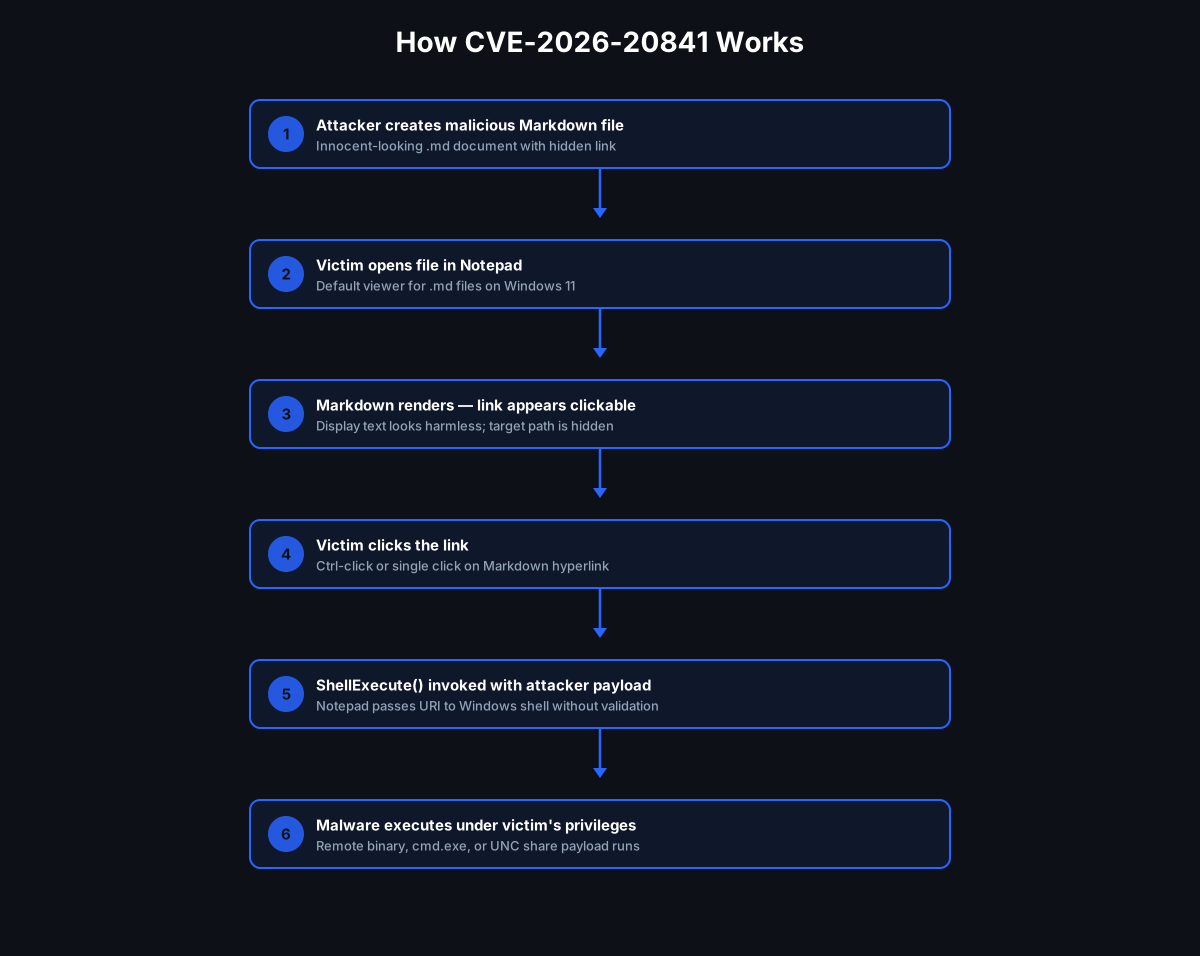
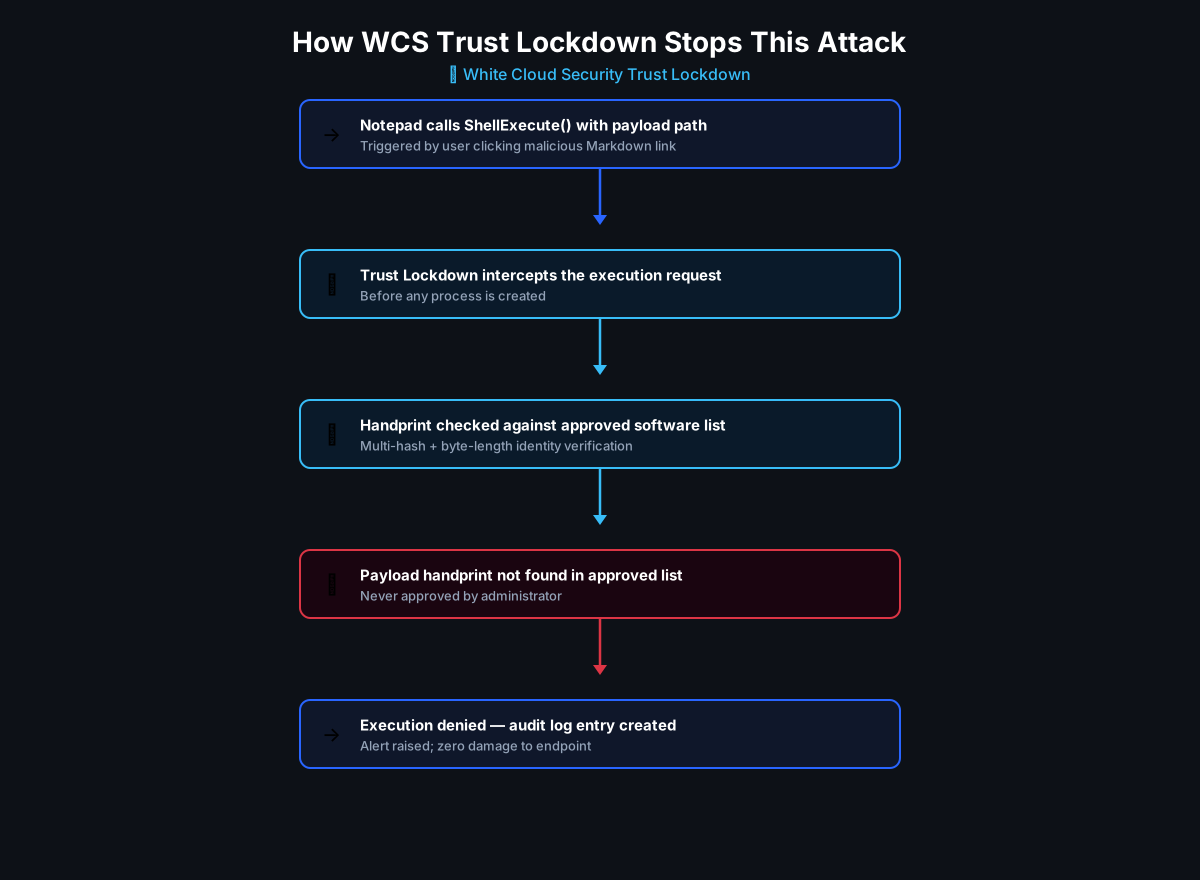
To illustrate how a Least Privilege control framework would affect this class of attack, consider the following hypothetical based on the publicly reported Stryker scenario:
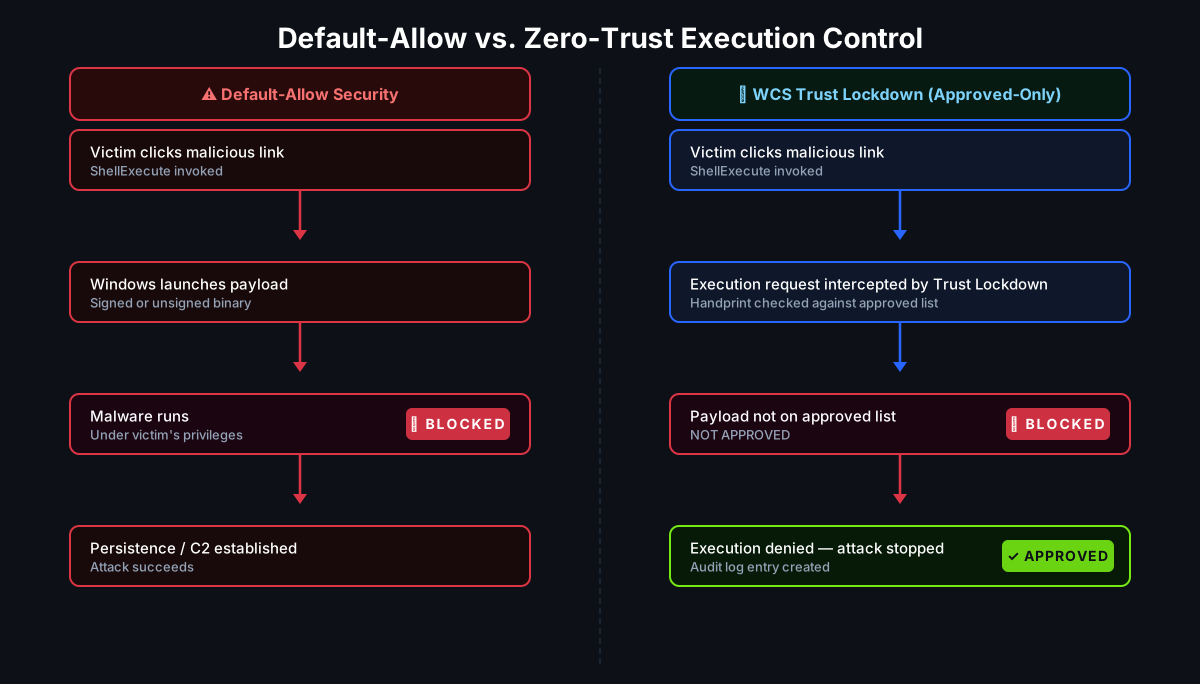
Without least privilege software control:
Phishing → stolen credentials → Intune admin access →
wiper payload pushed to endpoints → execution succeeds →
devices wiped → operations disrupted
With WCS approved-only execution enforcement:
Phishing → stolen credentials → Intune admin access →
wiper payload pushed to endpoints → execution attempt →
WCS policy check → file not approved → BLOCKED
The wiper never runs. No files are destroyed. Incident response for wiper cleanup is avoided.
Trusted Tools Can Become Attack Tools
A recurring theme in modern destructive attacks is the abuse of legitimate tools. Handala reportedly used Microsoft Intune, a trusted enterprise platform, to push destructive commands. Shamoon weaponized Windows' own disk access capabilities to perform its wipes.
This pattern — sometimes called "living off the land" — means that signatures, heuristics, and behavioral detections often struggle to fire in time. The attacker is using tools the environment already trusts.
A Least Privilege software control framework addresses this by reducing the blanket trust granted to tools and utilities. Organizations should ask:
- Can PowerShell be restricted to approved scripts only?
- Can remote support tools be blocked unless explicitly authorized per device or role?
- Can device management platforms be configured to require multi-administrator approval for bulk destructive actions?
- Are LOLBins (living-off-the-land binaries) accessible to all users, or only to specific approved roles?
- Can scripting engines be limited to digitally signed scripts from trusted publishers?
The goal is not to eliminate useful tools — it is to ensure that no single compromised account can weaponize them at scale.
Default-Allow vs. Least Privilege: A Clear Contrast
| Default-Allow Environment | Least Privilege Software Control | |
|---|---|---|
| Software execution | Anything can run unless blocked | Only approved files can run |
| Admin tool access | Broad — admin rights = full tool access | Restricted — tools require explicit policy |
| Wiper payload | Executes immediately if signed or undetected | Blocked — not in approved policy |
| Blast radius | Enterprise-wide | Contained |
| Detection requirement | Required before mitigation | Not required — execution is prevented |
| LOLBin/script abuse | Difficult to distinguish from legitimate use | Restricted by approved-binary policy |
Default-allow environments assume most software is safe and react after suspicious behavior appears. This model leaves attackers free to operate with legitimate tools for as long as detection takes.
Approved-only software control assumes the reverse: nothing executes without authorization. Attackers arriving with valid credentials and access to management tools are still blocked from introducing unapproved executables or scripts.
How a Least Privilege Software Control Framework Limits Blast Radius
Even when identity compromise occurs — and organizations should plan assuming it will — a properly configured Least Privilege software control framework significantly limits what an attacker can do next.
Key mechanisms that reduce blast radius:
Approved-only execution blocks wiper payloads, ransomware, and remote access tools that are not in the approved software policy, regardless of the delivery mechanism.
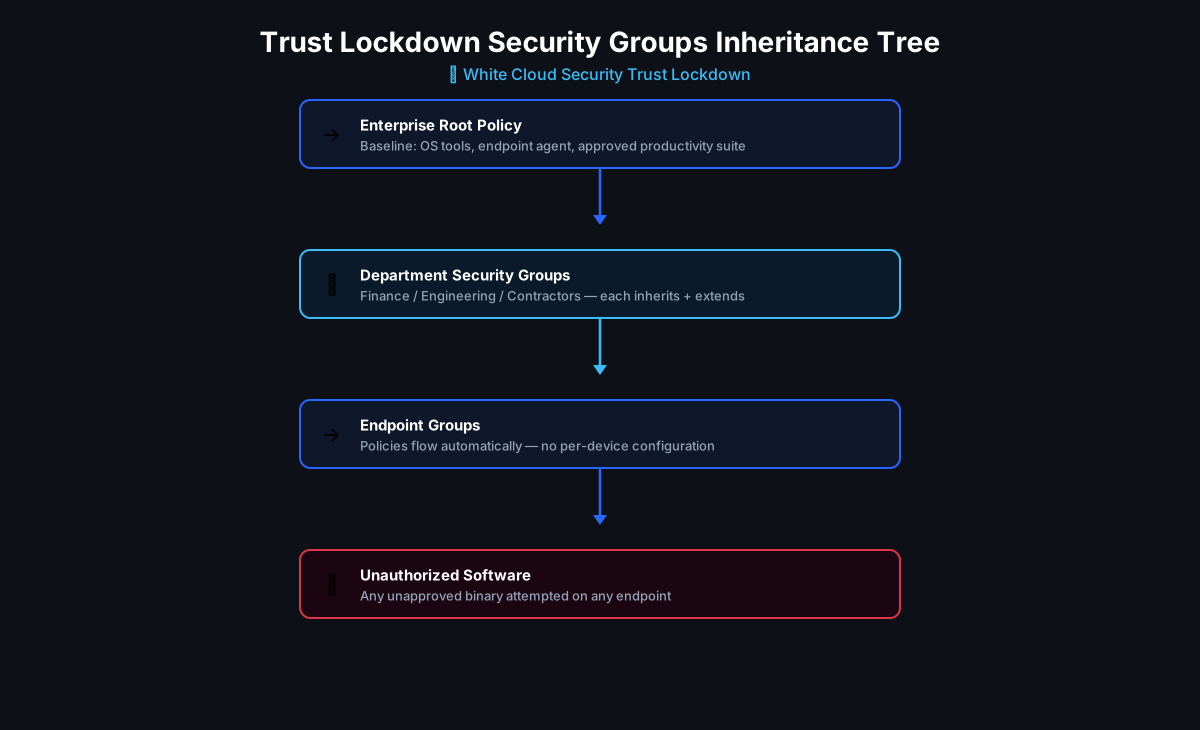
Policy inheritance through the Security Groups Inheritance Tree means that restrictive execution policies can be deployed at scale. Parent groups define the approved software baseline; child groups and individual endpoints inherit those restrictions automatically. A policy tightened at the enterprise level propagates down to every covered endpoint without manual per-device configuration.
Restricted scripting environments prevent PowerShell, cmd.exe, WSH, and other scripting engines from executing unapproved payloads — even when invoked by administrator-level processes or management platforms.
Controlled admin tooling means that remote access utilities, deployment tools, and management platforms are themselves subject to software approval policy, reducing the ability to push malicious payloads through them.
Least-privilege execution scope per role means that software approved for an IT administrator's endpoint is not automatically approved for a standard user's device, and vice versa. An attacker who compromises a standard account cannot escalate by running admin-specific binaries.
At White Cloud Security, we continue to track and report new hacking methods and tools — not just because of their immediate threat, but because patterns of reuse often expose the playbooks of these cybercriminal groups.
What Organizations Should Do Now
The Stryker and Shamoon incidents provide a clear blueprint for what organizations need to address — regardless of their current maturity level.
Restrict software execution to approved applications only. Move away from default-allow environments. Inventory what software actually needs to run on each device class and role, and build approved-only policies from there.
Minimize who can run sensitive tools. Not every administrator should have access to every management platform. Scope MDM admin rights carefully, require multi-administrator approval for bulk destructive actions, and use just-in-time privilege elevation where possible.
Restrict scripting engines and LOLBins. PowerShell, command shells, and built-in system utilities are frequent attacker tools. Approved-only script policies and restricted binary access significantly reduce the attacker's room to maneuver.
Treat management platforms as high-value targets. Intune, RMM tools, GPO infrastructure, and similar platforms are force multipliers — they're valuable precisely because they can reach thousands of endpoints simultaneously. Apply the same scrutiny to administrative access here as you would to your most sensitive data stores.
Apply phishing-resistant MFA to every privileged account. CISA and the National Cyber Directorate of Israel have both emphasized phishing-resistant authentication (FIDO2 hardware keys) for administrator accounts. Credential theft is the most common entry point for this class of attack.
Assume compromise and plan for containment. The right question is not only "how do we stop phishing?" but also "if a privileged account is compromised, what can the attacker actually do?" A well-configured Least Privilege software control framework ensures the answer is: very little.
How White Cloud Security Helps
Organizations cannot assume they will always stop phishing, credential theft, or identity abuse at the first step. But they can control what a compromised user, compromised admin account, or compromised endpoint is allowed to do next. That is why Least Privilege software control remains one of the most important pillars of modern Zero-Trust defense.
White Cloud Security Trust Lockdown enforces an approved-only, default-deny execution model across your endpoints. Every executable, script, installer, and binary must be explicitly approved before it can run — verified against a unique 6-Factor Cyber-Metric Handprint. Administrative rights do not override this policy. Intune or RMM delivery does not override this policy. The attacker's wiper payload does not run.
Trust policies are managed centrally and cascade down through the Security Groups Inheritance Tree, making least-privilege software control practical at scale — not just on paper.
If your organization wants to reduce the damage a destructive attack can do even after an attacker gains a foothold, explore how WCS Trust Lockdown enforces approved-only software execution.
Key Takeaways
- The Stryker attack (March 2026) and the Saudi Aramco Shamoon attack (2012) both demonstrate how destructive operations can scale rapidly once attackers gain access to a privileged account or management platform.
- The Handala group reportedly abused Microsoft Intune to push wiper commands — turning a trusted administrative tool into a weapon.
- Least privilege must extend beyond user accounts to cover which software, scripts, binaries, and administrative tools are permitted to execute.
- WCS separates administrator privilege from software execution rights: even an admin-pushed payload cannot run if it is not in the approved software policy.
- A Least Privilege software control framework, enforced via approved-only execution and hierarchical policy inheritance, significantly limits blast radius even after identity compromise.
- Organizations should plan assuming that credentials will eventually be stolen — and then build controls that limit what an attacker can actually do with them.
References
- Stryker flags disruption to orders, manufacturing a day after cyberattack
- Pro-Iran hacktivist group says it is behind attack on medical tech giant Stryker
- Stryker investigating cyberattack that caused widespread outage
- Insights: Increased Risk of Wiper Attacks — Unit 42
- Stryker Systems Disrupted in Cyber Attack; Handala Group Claims Responsibility — Arctic Wolf
- Customer Updates: Stryker Network Disruption
- A decade on from the Shamoon cyber attack — Middle East Institute